

For my entire career, I’ve worked with business and IT leaders to develop supply chain planning and execution capabilities. The fundamentals of what we’re trying to achieve and the technologies available to implement these capabilities haven’t evolved very much over the past few decades.
We want supply chains that balance speed, service, and cost to fulfill demand, delight customers, and enable organizations to grow and scale. Resiliency and the ability to deal with variability are inherent in this. We’ve also known that sharing data among trading partners is a good idea but doing so in reality is often hampered by mistrust.
Technology-wise, we’ve struggled with imperfect data. We’ve attempted to connect planning, execution and cross-functional decision-making. And we’ve relied on mathematical techniques based on statistics, optimization, and simulation that I learned as an undergraduate industrial engineering student 30 years ago.
As we look towards 2026, many of the constraints we faced historically are starting to disappear. Data is widely available and storage is relatively cheap. AI algorithms can digest large quantities of data and provide meaningful insights. Machine learning models can comprehend the factors that we know impact demand forecasts but generally haven’t incorporated into statistical models. Agents have the potential to coordinate, enhance, and automate scenario analysis and decision-making across functions.
With all this change, this isn’t a list of predictions. It’s a closer look at five fundamental truths I think are shaping what transformation looks like in an AI world. And a playbook for how supply chain leaders can rise above the supply chain status quo.
1. Disruption is the default mode.
In a recent study, 63% of manufacturing CEOs said supply chain disruptions are limiting their ability to innovate. Moreover, most experts agree that global shifts—big and small–will continue and likely become more frequent.
However, in that same survey, only 18% of CEOs reported considering major network reconfigurations because of these disruptions. (Think nearshoring production or selecting new suppliers.) Why? It’s costly to rearchitect a global supply chain.
Clearly the companies who aren’t reconfiguring their supply chains are still taking steps to deal with disruptions. In many cases, the answer is to improve decision-making for an existing network with a digital twin. A digital replica of your physical supply chain can be used to model, sense and respond to disruptions when—not if—they happen. With the revolution of AI decision support tools, rapid simulations and what-if modeling to make service, revenue and margin-aware decisions that consider the capabilities and constraints of the real world provide a level of responsiveness that just didn’t exist in the past. The level of investment is minor compared to physical changes in a network but the benefits of sensing and reacting to disruptions are significant.
2. You won't be ready for the future if you forget the past.
Traditional supply chain planning is often blind to history, starting fresh with current inventory, demand, and supply to build new plans. Planners then resolve issues and exceptions, relying on their own memory of past problems and solutions—good or bad—since systems don’t retain that knowledge. Planners are essential yet imperfect and scaling their ability to learn from past lessons remains a major challenge—even for leading companies—resulting in many insights being lost.
The reasons for this historical reality are multiple. To start with, supply chains are incredibly complex systems and the interactions of internal and external factors on ultimate outcomes is difficult to understand. Second, storing data has historically been very costly. And finally, even if data was archived, companies lacked the ability to analyze the data and build strategies based on past decisions and outcomes.
Recent technological advancements providing cheap cloud-based data storage and the promise of large language models (“LLMs”) to digest, learn from, and make recommendations has changed this reality. Supply chain data including historical demand, supply plans and transactional activity is a foundation for future supply chain automation. Forward-looking companies would be wise not to lose this knowledge.
The data foundation for future decision-automation should also be greedy for upstream, downstream and external data that impacts demand and supply availability, variability, and costs. Creating a data model that is independent of enterprise systems and able to absorb large amounts of structured and unstructured data is a wise investment.
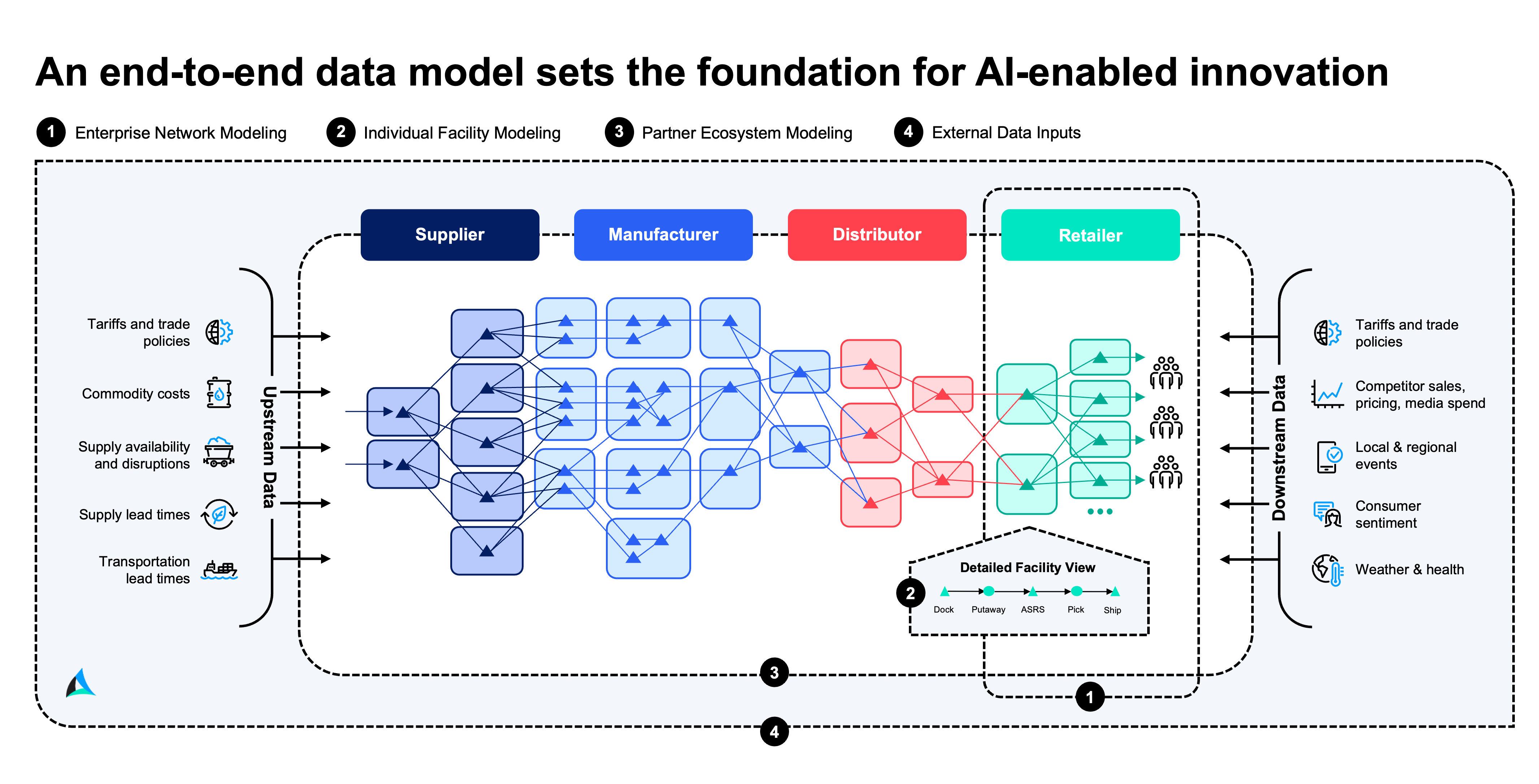
Figure 1. An example of the type of multi-enterprise data models that Spinnaker SCA has been implementing with clients
The most advanced supply chain organizations have already started to build an institutional memory and use it to improve future decision-making. This type of data model will help your organization be ready to adopt AI even if the specific use cases aren’t quite in reach today.
3. Old ways of working won't work with AI.
For decades, business leaders have known that connecting decision-making across functions and supply chain partners is a good idea. There is clear value in seeing and considering the big picture. This is why Sales & Operations Planning (S&OP) gained popularity in the 1980s. It’s why Collaborative Planning, Forecasting and Replenishment (CPFR) was pioneered by P&G and Walmart in the mid-1990s. And why, in the 90s and early 2000s there was a boom in enterprise software developed to better orchestrate S&OP and end-to-end supply chain planning.
Most of these processes are anchored in monthly or weekly planning cadences due to the data processes challenges that existed when they were created. In 2026, are monthly or weekly supply chain processes really best-in-class?
Over the last 10 years, the emergence of cloud-based data platforms and machine learning and GenAI have made it feasible to create multi-enterprise data models and make better decisions using this data. Based on where we sit today, autonomous decision-making doesn’t seem so far-fetched.
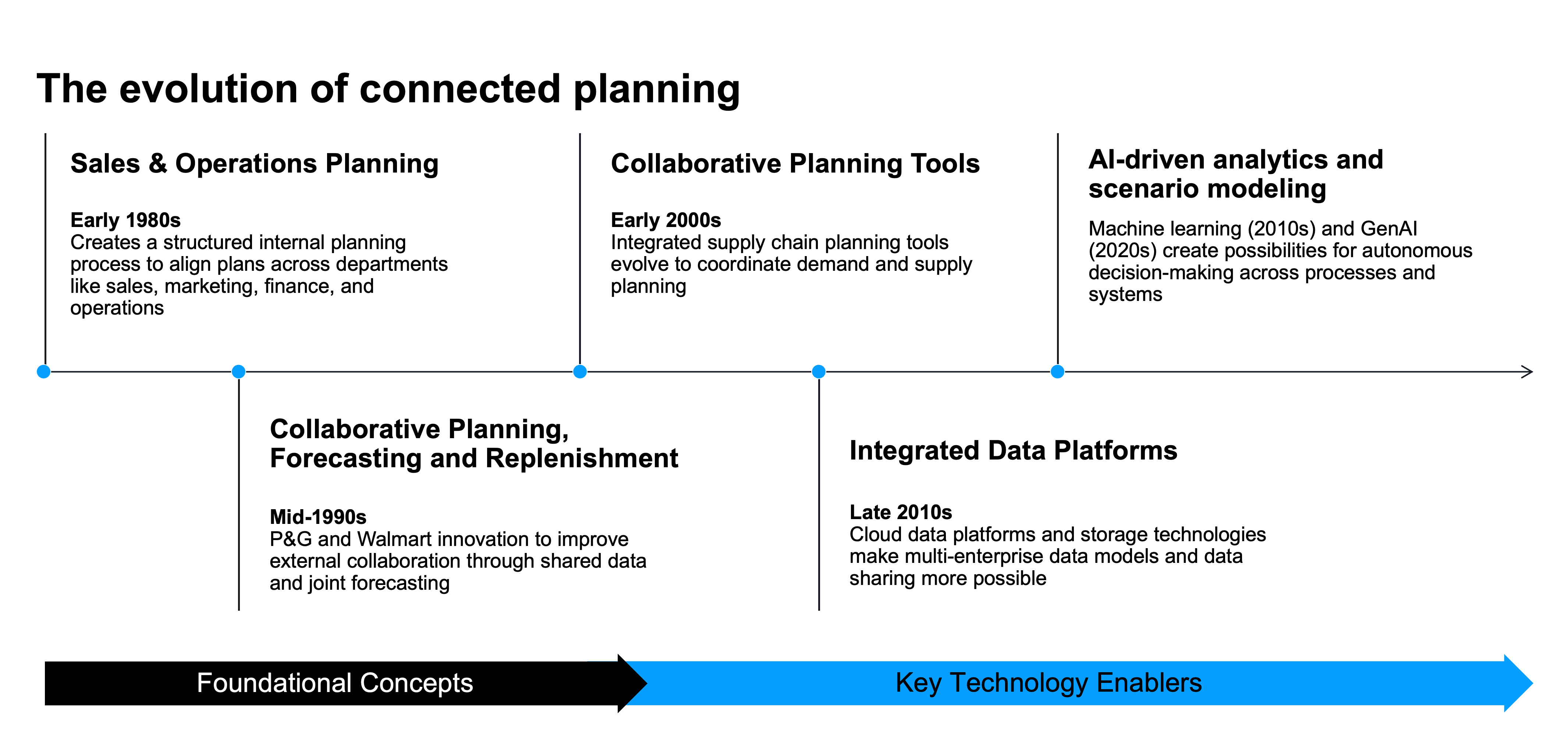
Figure 2. The evolution of connected planning from S&OP to AI
This evolution supports what we’ve known all along: business decisions are interconnected. For example, in the retail context, a somewhat localized decision about next season’s assortment should very much be considered alongside promotional plans, price elasticity, demand forecasting and supply planning.
While agentic AI is the buzzword of the moment, the promise of agentic AI and its ability to take these islands of data and analytics and bring them together is real. The ability of this technology to generate context-relevant insights from large amounts of data, learn to identify root causes and—eventually with enough data and feedback—automate decision-making can be used in combination with existing decision-support systems in supply chain and beyond.
But the promise of these agents won’t be realized without revisiting the underlying business process and how decisions get made. Just as S&OP created a template for cross-functional decision-making monthly, we need to revisit the processes, data and logic used to make cross-functional decisions to take advantage of the promise of agentic AI.
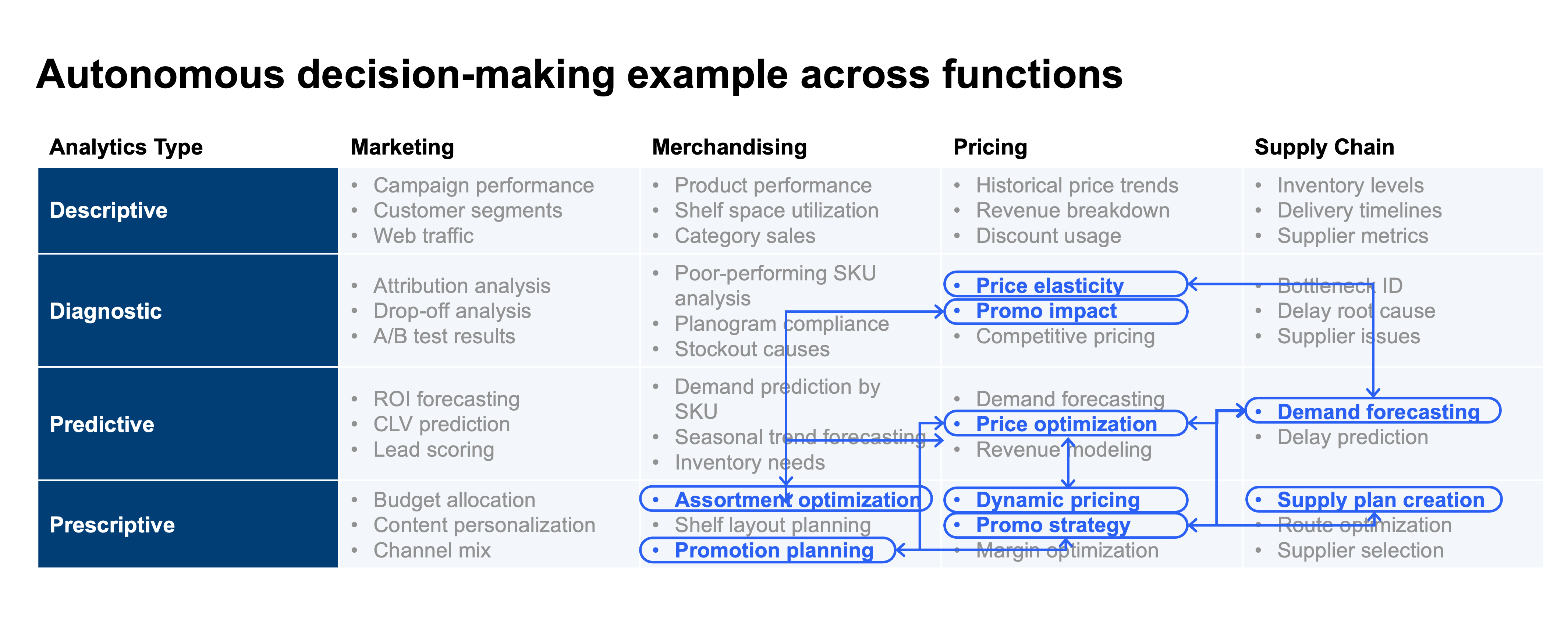
Figure 3. An example of cross-functional decision-making to better integrate marketing, merchandising, and supply chain decision-making
As we look at improving decision-making capabilities, the question moves from “what’s possible” (i.e., S&OP is monthly because it takes that long to run the processes and meetings) to “what’s the right cadence to make decisions?”
These decisions span demand shaping activities like promotions and pricing decisions to change forecasts, supply shaping activities to re-plan production, transfers, and purchases, allocations planning decisions to match the demand and supply, and decisions to expedite supply or resolves constraints. Moving all decision-making to “real time” likely isn’t the answer, but eliminating technology-induced lags in processes is a huge opportunity.
4. Modernization has a half-life.
At the same time that AI capabilities for decision support are making huge leaps ahead, there’s another factor at play: the speed of modernizing your technology stack. More than ever before, AI tools have made it cheaper, faster and easier to implement enterprise software, agents and decision-support technologies. Original enterprise software implementations of mainframes took half a decade to deploy and the ERP systems that followed took multiple years, but today’s agentic solutions are less labor intensive and can be deployed in months.
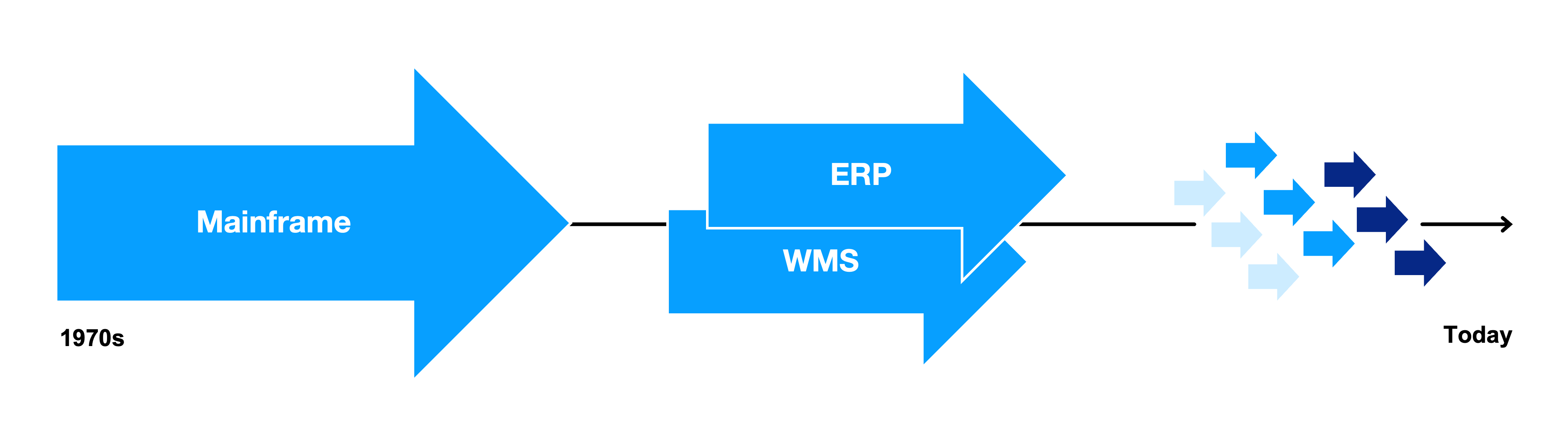
Figure 4. The speed and size of technology deployments has fundamentally changed
Making these agentic deployments successful continues to require having a clear vision, good data and effective change management, but the technology modernization itself is no longer the long pole in the tent.
Today, “big bang” transformations are few and far between. The pace of change and innovation is speeding up. Two year-long implementation cycles for typical enterprise software packages are too slow. Stakeholders should instead focus on composable, right-sized systems that you can configure for your business and adopt in smaller, faster releases that don’t interrupt day-to-day operations.
The AI-enabled development process and the change in how software is developed and deployed also creates an opportunity to think differently about build versus buy decisions. Enterprise software isn’t going anywhere, but in many cases it may be better to build a custom, business-specific agent to enable a new capability. This solution could be based on a software vendor’s agentic platform, but the door is open to build custom agents that aren’t tied to enterprise software. Embrace this acceleration in innovation with test and learn cycles to rise above the supply chain status quo.
5. Empathy is not a commodity.
As AI continues its rise, it’s critical for business leaders and individuals alike to remember that chasing higher productivity without empathy is short-term thinking. AI provides a significant opportunity to improve decision-making, but key business decisions will continue to require creativity and judgement that cannot be automated. Building a workforce that has the background knowledge and experience to make such decisions will continue to be critically important. With this in mind, the adoption of AI solutions requires us to:
Elevate, don’t just automate. Eliminating mundane tasks should be a means to free up time to focus on complex decisions. If you gave a planner better information at the start of each day, that person could save 3-4 hours by not having to assemble and analyze a series of reports. This time can be better used evaluating scenarios to shape demand based on business objectives and supply constraints. Showing up to work with a clear analysis of what has changed since the employee stopped working is a game changer.
Stay human-led, AI-enabled. Use human-in-the-loop patterns. Machines can automate repetitive tasks. People are what bring the strategy and ability to connect the big picture.
Learn continuously. Upskill and reskill where needed. Build roles, SOPs, and escalation paths that ensure technology is adopted and creates an ROI. And use this as an opportunity to pivot to end-to-end, big picture, systems-thinking.
The future is human-led. AI-powered. Impact-driven.
The pace of innovation is rapid and supply chains are not simple systems that can be easily managed—they’re dynamic ecosystems. To thrive in this environment, leaders must rethink how decisions are made, how data is used and how technology is adopted.
The convergence of AI, cloud platforms and connected decision-making offers unprecedented opportunities to simplify complexity and unlock innovation. But the real differentiator? The thoughtful combination of people, process and technology, which is the same as it’s always been.
As we design, build and orchestrate tomorrow’s supply chains, continue to foster end-to-end, big picture, systems thinking. The companies that do this well will get ahead and stay ahead in 2026 and beyond.